Also known as
Main function
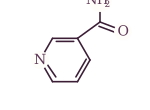
Niacinamide is a water-soluble form of vitamin B3 used in cosmetics for skin conditioning, barrier support, and evening out tone. It's not an exfoliant, so it plays nice with almost everything else in your routine.
What does this mean for melanin-rich skin?
Niacinamide blocks the signal that moves pigment from melanocytes into skin cells. That's why it works well on post-inflammatory hyperpigmentation (PIH) — the dark marks deeper skin tones are prone to after acne, bumps, or shaving irritation.
It's mild enough to use daily, and unlike acids, it won't make your skin more sun-sensitive.
Evidence
Pigmentation Mechanistic · Clinical
Can help fade dark marks and even out tone over time — this is a gradual effect, not an overnight one.
PIH specifically Clinical
Strongest evidence is for post-inflammatory hyperpigmentation — less is known about its effect on other forms of discoloration.
Irritation Well tolerated
Generally gentle, but patch test first if your skin tends to react.
How does climate affect this?
Niacinamide itself is a stable compound and generally tolerates heat well. But that's not the same as saying a finished product containing it will stay stable in tropical heat and humidity — the other ingredients in the formula, the packaging, and the preservation system all play a role too, and any of those can behave differently once heat and moisture are added.
Niacinamide can also help regulate oil, which is genuinely useful in humid climates, since sweat and excess sebum together tend to worsen breakouts and leave skin looking dull.
Key considerations
- — Raw ingredient stability, finished-product stability, and how a specific product should be stored are three different things — good performance on one doesn't guarantee the others.
- — Follow the manufacturer's storage instructions for that specific product rather than assuming it will hold up just because niacinamide is present.
What can you actually check?
Texture varies by formula — a formulator can build niacinamide into a thin serum, a gel, or a heavier cream, and all of those can be genuine. What's more telling: bottles that have visibly separated, smell strongly of alcohol, or have labels that look peeled, blurry, or misprinted.
Every cosmetic sold in Nigeria is legally required to carry a NAFDAC number. Check yours on NAFDAC's NAPAMS portal — no result, or a completely different product, is your answer.
Buy from the brand's own store or a distributor you know is authorized — if a price looks unusually low compared to that seller's own official price, that's worth a second look, more than comparing it to what you've seen elsewhere.
- Solubility
- Water-soluble
- Typical formulation pH
- 5.0 – 7.0
- Concentration range
- 2 – 10%
- Common concentration used
- ~5%
- Best for
- All skin types, including sensitive — especially oily, acne-prone, or uneven-toned skin
- Best time of use
- AM or PM
Niacinamide is chemically stable across a wider pH range (roughly 3–7.5) — 5.0–7.0 is simply where it's most commonly formulated, often for compatibility with other actives in the same product.
The claims on this page draw on the following peer-reviewed sources. Each is linked to what it supports, not cited generally.
-
Pigmentation / melanosome transfer
Hakozaki T, Minwalla L, Zhuang J, et al. The effect of niacinamide on reducing cutaneous pigmentation and suppression of melanosome transfer. Br J Dermatol. 2002;147(1):20–31.
View on PubMed → -
PIH specifically
Navarrete-Solís J, Castanedo-Cazares JP, Torres-Álvarez B, et al. A double-blind, randomized clinical trial of niacinamide 4% versus hydroquinone 4% in the treatment of melasma. Dermatol Res Pract. 2011;2011:379173.
View on PubMed → -
Facial oiliness / sebum
Draelos ZD, Matsubara A, Smiles K. The effect of 2% niacinamide on facial sebum production. J Cosmet Laser Ther. 2006;8(2):96–101.
View on PubMed → -
Barrier support
Tanno O, Ota Y, Kitamura N, Katsube T, Inoue S. Nicotinamide increases biosynthesis of ceramides as well as other stratum corneum lipids to improve the epidermal permeability barrier. Br J Dermatol. 2000;143(3):524–531. -
Safety / tolerability / pH stability
Cosmetic Ingredient Review Expert Panel. Final report of the safety assessment of niacinamide and niacin. Int J Toxicol. 2005;24(Suppl 5):1–31.
This list will grow as each new claim on the site is checked against its source. If you spot a claim without a listed source, that's a gap to flag — not evidence it's wrong, but a page waiting on its citation.
Sourcing tier: specific cited studies.
At a glance: INCI Niacinamide · Vitamin/skin-conditioning · Water-soluble · Common in serums, moisturizers, toners, cleansers · AM or PM · Last reviewed September 2026