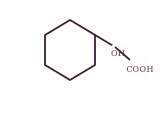
Also known as
Main function
Mandelic acid is derived from bitter almonds and has a much larger molecule than glycolic acid, which slows its penetration and makes it one of the gentler AHAs available.
What does this mean for melanin-rich skin?
Mandelic acid's molecule is roughly double the size of glycolic acid's, so it penetrates more slowly and evenly. That slower penetration is directly why it causes less irritation. Since irritation is the trigger for PIH, mandelic acid is widely considered one of the safer AHA choices for melanin-rich and reactive skin specifically.
It also has antibacterial properties, which is a genuine bonus for acne-prone skin.
Evidence
Large molecule, slower penetration, lower PIH risk Clinical
Molecular size and penetration rate is established chemistry; lower irritation and PIH risk relative to glycolic acid is reported consistently across clinical and formulation sources.
How does climate affect this?
Mandelic acid as a raw ingredient is stable. Its practical climate benefit is the same sebum-reducing property that helps in humid, breakout-prone conditions.
What can you actually check?
Every cosmetic sold in Nigeria is legally required to carry a NAFDAC number. Check yours on NAFDAC's NAPAMS portal — no result, or a completely different product, is your answer.
Then check the ingredients list for "Mandelic Acid" and its percentage.
- Typical formulation pH
- 3.5 – 4.5
- Concentration range
- 5 – 20% (higher for professional peels)
- Common concentration used
- 5–10%
- Best for
- Sensitive, acne-prone, or hyperpigmentation-prone skin — one of the gentler AHAs for melanin-rich skin
Molecular size and slower-penetration mechanism is established formulation chemistry. Comparative PIH-risk claims are referenced consistently across multiple clinical and formulation sources, though none reviewed here is a single landmark trial — flagged as consistent secondary reporting.
Sourcing tier: general formulation/dermatology chemistry, consistent secondary reporting.
At a glance: INCI Mandelic Acid · AHA / gentle exfoliant · Water-soluble · Common in serums, toners · PM · Last reviewed September 2026