Also known as
Main function
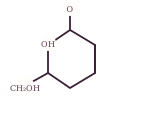
Kojic acid is derived from fungal fermentation and is one of the most widely used brightening agents worldwide, second only to hydroquinone in effectiveness.
What does this mean for melanin-rich skin?
Kojic acid blocks melanin production by binding the copper at the center of the tyrosinase enzyme, a genuinely different mechanism from arbutin or Vitamin C. It's effective and widely used for melasma and PIH.
It has a real trade-off worth knowing. It's one of the more sensitizing brightening ingredients, with documented contact allergy risk, especially at higher concentrations. If your skin reacts easily, this is one to introduce cautiously and in combination with calmer ingredients rather than alone.
Evidence
Tyrosinase inhibition via copper chelation Clinical
Well-established, second only to hydroquinone in effectiveness for skin lightening in comparative literature.
Sensitization risk Clinical
Documented contact allergy risk, with facial dermatitis reported at higher concentrations in clinical literature.
How does climate affect this?
This is a genuinely fragile ingredient in heat. Kojic acid oxidizes readily. Heat and light both accelerate it, and even trace metal contamination during manufacturing can trigger discoloration.
Key considerations
- — Many formulators use kojic dipalmitate, a more stable ester form, specifically to survive hot-climate storage better than pure kojic acid.
What can you actually check?
Every cosmetic sold in Nigeria is legally required to carry a NAFDAC number. Check yours on NAFDAC's NAPAMS portal — no result, or a completely different product, is your answer.
Then check the ingredients list for "Kojic Acid" or "Kojic Dipalmitate." A serum that's turned notably brown has likely oxidized, regardless of authenticity, and won't work as intended either way.
- Typical formulation pH
- 4.0 – 6.0
- Concentration range
- 1 – 4%
- Common concentration used
- 1% (2.5%+ carries higher sensitization risk)
- Best for
- Normal to resilient skin — use caution if sensitive or reaction-prone
The claims on this page draw on the following sources.
-
Safety assessment
Burnett CL, et al. Final report of the safety assessment of kojic acid. Int J Toxicol. 2010;29(6 Suppl):244–273. -
Contact allergy / sensitization data
Contact Dermatitis. 1995;32:9–13.
Sourcing tier: specific cited studies.
At a glance: INCI Kojic Acid · Brightening / tyrosinase inhibitor · Water-soluble · Common in serums, soaps · AM or PM · Last reviewed September 2026