Also known as
Main function
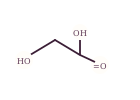
Glycolic acid is the smallest AHA molecule used in skincare, derived from sugar cane. Its small size lets it penetrate fast and deep, which is both its main strength and its main caution.
What does this mean for melanin-rich skin?
Glycolic acid is the smallest AHA molecule, which lets it penetrate fast and deep. That's genuinely effective for texture and fine lines, but that same speed is the concern for melanin-rich skin. Fast, deep penetration raises irritation risk, and irritation is what tends to trigger new PIH.
This doesn't mean avoid it. It means start low, go slow, and know that gentler AHAs, like mandelic acid, are usually the safer starting point for reactive or PIH-prone skin.
Evidence
Fast penetration, elevated PIH risk Clinical
Small molecular size and fast penetration are established chemistry; elevated irritation and PIH risk with overuse in darker skin tones is reported in clinical literature.
How does climate affect this?
Glycolic acid as a raw ingredient is stable, but it increases sun sensitivity. That's genuinely more relevant in a high-UV climate, where consistent sunscreen use matters more than usual while using this ingredient.
What can you actually check?
Every cosmetic sold in Nigeria is legally required to carry a NAFDAC number. Check yours on NAFDAC's NAPAMS portal — no result, or a completely different product, is your answer.
Then check the ingredients list for "Glycolic Acid" and its percentage. Cosmetic strengths are typically 4–10%. Anything peel-strength (20%+) should be professionally supervised, not self-applied.
- Typical formulation pH
- 3.0 – 4.0
- Concentration range
- 4 – 10% (cosmetic)
- Common concentration used
- 5–8%
- Best for
- Resilient, non-sensitive skin — go especially slow if prone to marking or reacting
Irritation and PIH risk in darker skin tones with overuse has been referenced in the Journal of Clinical and Aesthetic Dermatology, 2021. The original article title could not be independently confirmed in the sources reviewed for this entry, so this is flagged honestly as a secondary-source citation rather than a fully verified one.
Sourcing tier: secondary source, unverified original citation — will be updated once confirmed.
At a glance: INCI Glycolic Acid · AHA / exfoliant · Water-soluble · Common in serums, toners, peels · PM · Last reviewed September 2026