Also known as
Main function
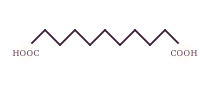
Azelaic acid is a naturally occurring acid found in grains like wheat, barley, and rye. In dermatology it treats acne, calms rosacea, and fades hyperpigmentation, making it unusually versatile for one ingredient.
What does this mean for melanin-rich skin?
Azelaic acid has an unusual, genuinely useful mechanism. It selectively affects overactive melanocytes while largely leaving normally-functioning ones alone, rather than suppressing pigment production broadly. That selectivity is part of why it's considered one of the safer, better-evidenced options for post-inflammatory hyperpigmentation and melasma in darker skin tones.
It's also one of the few actives considered compatible with pregnancy, for anyone who needs that, though a doctor should confirm this for individual circumstances.
Evidence
Selective melanocyte action Clinical
Systematic reviews confirm efficacy for post-acne hyperpigmentation and melasma, with a selectivity mechanism that distinguishes it from broader pigment-suppressing actives.
How does climate affect this?
Azelaic acid as a raw ingredient is chemically stable and doesn't have notable heat-sensitivity concerns beyond standard storage practice.
What can you actually check?
Every cosmetic sold in Nigeria is legally required to carry a NAFDAC number. Check yours on NAFDAC's NAPAMS portal — no result, or a completely different product, is your answer.
Then check the ingredients list for "Azelaic Acid" and its percentage. Cosmetic formulations are typically lower-strength than prescription versions, which run 15–20%.
- Typical formulation pH
- 4.0 – 5.0
- Concentration range
- 10 – 20%
- Common concentration used
- 10% (cosmetic)
- Best for
- Acne-prone, rosacea-prone, or PIH-prone skin, including sensitive skin
Generally regarded by dermatology guidance as pregnancy-compatible — always confirm with a doctor for pregnancy-specific advice.
The claims on this page draw on the following sources.
-
Versatility and selective melanocyte mechanism
Searle T, Ali FR, Al-Niaimi F. The versatility of azelaic acid in dermatology. J Dermatolog Treat. 2022;33(2):722–731. -
Efficacy for acne and rosacea
Dreno B, et al. J Eur Acad Dermatol Venereol. 2017;31(7):1121–1128.
Sourcing tier: specific cited studies.
At a glance: INCI Azelaic Acid · Acne / rosacea / brightening · Water-soluble · Common in creams, gels · AM or PM · Last reviewed September 2026