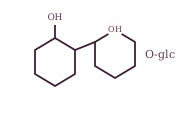
Also known as
Main function
Alpha arbutin is a sugar-bound form of hydroquinone, a more stable and potent version than its cousin beta-arbutin. It's used to reduce the appearance of dark spots and uneven tone.
What does this mean for melanin-rich skin?
Alpha arbutin is a glucoside — chemically, it's a sugar-bound form of hydroquinone. This matters for two reasons: it inhibits tyrosinase directly, and it's considerably gentler and safer than free hydroquinone.
It's worth knowing the honest chemistry here. Skin's own surface bacteria can slowly break the alpha-arbutin bond and release trace amounts of hydroquinone. This happens at very low levels. It's generally considered safe at cosmetic concentrations, but it's not something to gloss over. Alpha arbutin specifically, not its cousin beta-arbutin, is the more potent and more stable tyrosinase inhibitor of the two.
Evidence
Tyrosinase inhibition Mechanistic · Clinical
Direct, well-studied enzyme inhibition, stronger than beta-arbutin in comparative lab testing.
Trace hydroquinone release Mechanistic
Documented in lab studies of skin surface bacteria; occurs at low levels generally considered safe at cosmetic concentrations.
How does climate affect this?
Alpha arbutin as a raw ingredient is more stable than plain L-ascorbic acid, but it still benefits from a controlled, slightly acidic pH and protection from heat and light.
Key considerations
- — In a hot climate, a finished product's shelf life depends heavily on how well it's buffered and packaged.
What can you actually check?
Every cosmetic sold in Nigeria is legally required to carry a NAFDAC number. Check yours on NAFDAC's NAPAMS portal — no result, or a completely different product, is your answer.
Then check specifically for "Alpha-Arbutin," not just "Arbutin." They're related but meaningfully different in strength, and some labels use the terms loosely.
- Typical formulation pH
- 4.0 – 6.0
- Concentration range
- 1 – 2% (EU cap)
- Common concentration used
- 1–2%
- Best for
- Most skin types seeking gradual brightening, including sensitive skin
The claims on this page draw on the following sources.
-
Alpha vs. beta arbutin tyrosinase inhibition
Funayama M, et al. Effects of α- and β-arbutin on activity of tyrosinases from mushroom and mouse melanoma. Biosci Biotechnol Biochem. 1995;59:143–144. -
Hydrolysis to hydroquinone by skin bacteria
Bang SH, et al. Hydrolysis of arbutin to hydroquinone by skin bacteria. J Cosmet Dermatol. 2008;7:189–193.
Sourcing tier: specific cited studies.
At a glance: INCI Alpha-Arbutin · Brightening / tyrosinase inhibitor · Water-soluble · Common in serums · AM or PM · Last reviewed September 2026